Unified Deepfake Detection
A forensic platform combining rPPG pulse, inertial optical flow, and micro-expression signals with a PennyLane quantum-state simulation, plus classical ML audio detection and OpenCV error-level analysis for images.
Engineering Lab
An applied engineering workspace focused on machine learning, real-time vision, embedded sensing, and experimental research - from deepfake forensics to edge spectrometer pipelines.
Selected work
Five builds spanning forensic ML, quantum-simulated analysis, embedded sensing, applied vision, and reinforcement learning. Each project has a detailed engineering case study covering its architecture, decisions, and limitations.
A forensic platform combining rPPG pulse, inertial optical flow, and micro-expression signals with a PennyLane quantum-state simulation, plus classical ML audio detection and OpenCV error-level analysis for images.
Classical-quantum-simulated forensic analysis of video, image, and audio using rPPG, optical flow, and micro-expression signals. Quantum components are simulated on classical CPU hardware.
External demo. It is served from a local host through a temporary Cloudflare tunnel and may be offline when that host is not running.

A hardware-software integration where a Raspberry Pi and ESP32 drive an AS7265x 18-band spectrometer, feeding a PyTorch SpectroNet classifier that flags microplastics in water samples with a live Flask + SocketIO dashboard.
A food-scanning application that classifies food items with a multi-task ResNet-50 model and maps them to basic nutritional and Ayurvedic (Dosha) reference information. A prototype, not a clinical or nutritional authority.
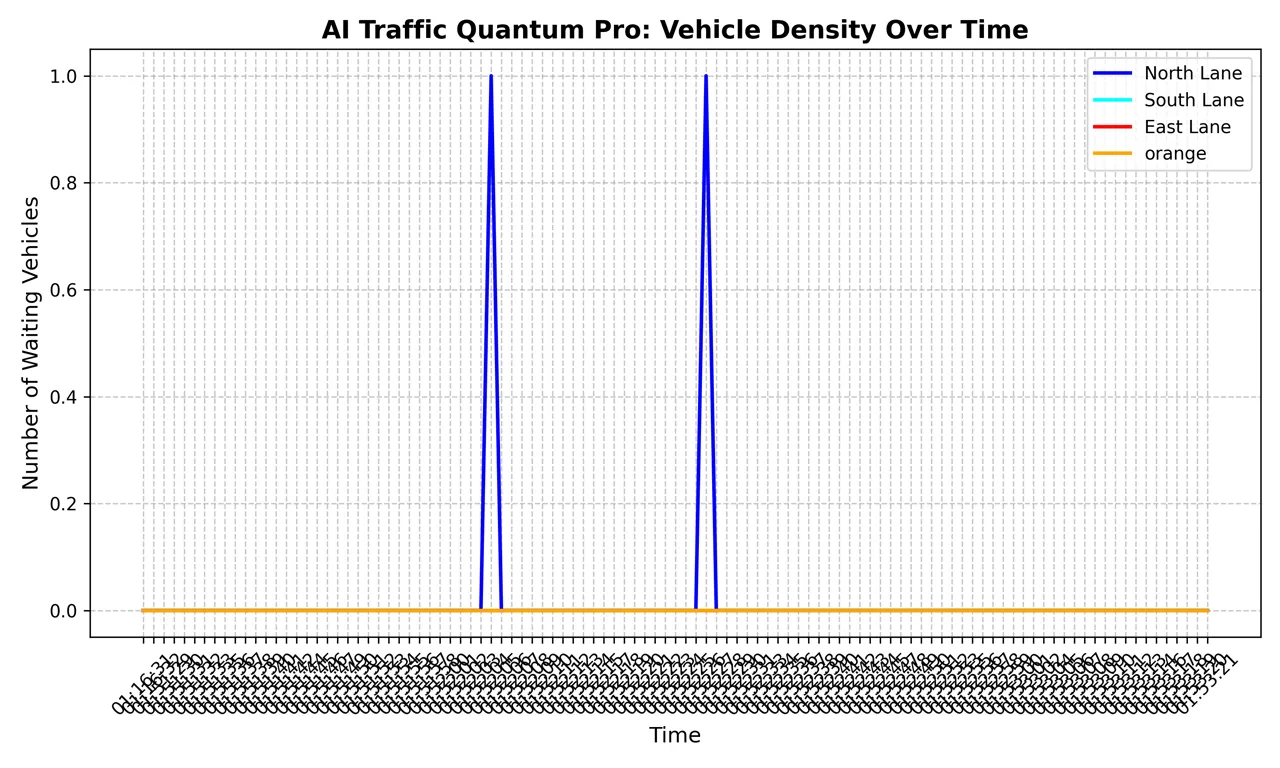
An experimental traffic-control system pairing YOLOv8 vehicle detection with SUMO microscopic simulation and PPO reinforcement learning to optimize signal timing. CARLA is an optional, non-primary simulation dependency.
Capabilities
The tooling and disciplines exercised across the projects above.
PyTorch classifiers, scikit-learn pipelines, Stable-Baselines3 PPO agents, and quantum-circuit simulation with PennyLane and Qiskit.
Real-time detection and analysis with YOLOv8, OpenCV, and MediaPipe FaceMesh for physiological and spatial signals.
Python services with Flask and FastAPI, React/Vite and Streamlit front ends, SocketIO telemetry, and Docker-based packaging.
Raspberry Pi edge hubs and ESP32/Arduino controllers bridged over I2C and serial links for sensor and actuator control.
Sensor integration including the AS7265x 18-channel spectrometer, IMU modules, and motor drivetrains.
Open threads
Exploratory directions. These are prototypes and studies, presented with their limits stated.
Mapping physiological signals onto simulated quantum states as a mathematical framework for measuring signal complexity. Simulation only - no execution on quantum hardware and no quantum-advantage claims.
Using rPPG pulse, inertial optical flow, and micro-expression strain against calibrated thresholds, rather than a single black-box frame classifier.
PPO agents trained on a custom SUMO/Gymnasium environment, with classical heuristics serving as the verified primary runtime.
Combining NIR/visible spectroscopy with on-device inference to classify water samples and move analysis closer to the sensor.
About
The Engineering Lab is a personal workspace for building complete systems rather than isolated models. The focus is the full path: sensing and data capture, model and algorithm design, the software that ties it together, and the presentation that makes it usable.
Work leans toward applied AI, computer vision, embedded hardware, and the interfaces that connect them, with an emphasis on prototypes that run end to end and document their own limitations honestly. Many components here are experimental and are labeled as such rather than overstated.